


According to someone who has actually had the surgery done
Talking about recovery from any procedure is easy. Don’t lift anything heavy. Take Bromelain tablets. However, if you haven’t been there before and tried it, there’s no way to realistically know what to expect, and this can be daunting for patients seeking a surgical procedure.
Almost a year ago – to be precise, on June 16 – I chose to have a breast augmentation. I received very detailed guidance from Dr. Adam Kolker, MD, a fantastic plastic surgeon and a member of the American Society of Plastic Surgeons, on what the recovery would look like. I was lucky that a friend of mine had undergone the same operation a few weeks earlier, and being able to rely on her own experience was a great comfort for me. However, I still panicked at times and called or texted Dr. Kolker – strange questions like “Is my bra too tight, can it pop the implant?” were just a few, but what I mean is, everything you experience in the recovery process is completely new for you and your body, and you don’t know if it’s normal or a cause for concern.
Below, I delve deep into my breast augmentation recovery from day one to day seven, and I share an honest – and sometimes embarrassing – account of what you can expect.
Surgical Day
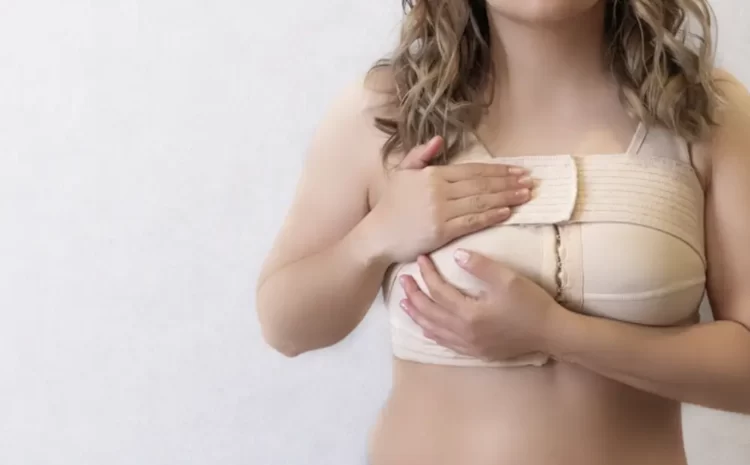
Waking up in Dr. Kolker’s recovery room, I was being looked after by Kat, one of Dr. Kolker’s registered nurses. She handed me an apple juice – I was very thirsty as I hadn’t been allowed to eat or drink anything past midnight on the day of the surgery – and gave me animal crackers. I was surprised that I didn’t feel any pain, and even more surprised because my chest wasn’t mummified as I expected (which I thought it would be). Instead, I was wearing something that looked like a sports bra for a preteen – no wires, hook closures in the front, and overall, I didn’t feel anything.
After my friend arrived, we went back home with an Uber. I felt a bit uncomfortable because our driver was a bit chaotic, and when we had a sudden brake, I felt pressure as I leaned forward, but there was no pain. All my prescriptions and supplements were already on my nightstand, as per Dr. Kolker’s pre-op instructions, and I had bought more pillows – I couldn’t comfortably sleep lying completely flat for a few months – so I built a pillow fort for myself and took a nap sitting up.
There were two important lessons I learned the hard way that day. First, I couldn’t use my arms to transition to a different lying position on the bed or couch since my pectoral muscles were also healing. Lifting something heavier than a pillow was absolutely impossible – I couldn’t even lift the pillow higher than my belly button. I had to make a slight shifting movement to move up or down to get comfortable. Sleep was the most challenging part of recovery. Second, I had to keep my torso very upright. If I leaned forward, I would feel a stinging sensation in my chest; if I leaned too far back, then I would feel a sharp ache. I gained a newfound respect for the chest muscles, as it turns out I used them much more than I had thought. This anticipated discomfort meant not leaning forward to get up from the couch, not adjusting my body or pillows on the bed, and getting creative when dressing, undressing, and washing my hair.
I didn’t have much of an appetite when I woke up, but I sipped on some Gatorade and had a fruit juice popsicle – another recovery lifesaver. I still didn’t feel any pain, but there was pressure on my chest since the implants were placed under the muscle, which was uncomfortable, and moving my arms was difficult. I chatted with my roommates when I got back to the room and still slept sitting up.
The second day after the surgery
On the second day, I had trouble sleeping – sleeping in a semi-upright position was uncomfortable, even with half a dozen pillows. The pressure I felt after the surgery turned into aching, and I took the prescribed Percocet for relief. Following Dr. Kolker’s advice, I made an effort to move around my apartment rather than just lying down. Overall, I felt okay, just a bit sluggish. I actually felt so normal that at the moment I felt normal, I suddenly experienced a sharp pain right in the center of my chest. This happened as I attempted to open a sticky refrigerator door (it took a while before I felt willing to open and close doors for myself).
I spent most of the day sleeping, moving around the house, and watching TV. Dr. Kolker called to check my progress, providing an opportunity to explain in detail, ensuring that everything was normal (which we confirmed).
Before going to bed, I took a shower – a probably more dramatic experience than it actually was. I undressed as best as I could, and then asked for assistance in taking off the bra. There were still bandages over the stitches, and I was instructed to remove them during my follow-up a week later, but I needed to wash the area with soap. I used Dove, but later learned I should have used Cetaphil. Undressing was a bit challenging without being able to bend, and I needed assistance from my roommate.
The third day after the surgery
The third day after the surgery was the toughest. I couldn’t get a wink of sleep. I watched the sun set and rise from my bed. I couldn’t get comfortable among the pillows, and even a slight lean to one side sent a shockwave through that side of my chest, making me sit up immediately. When I can’t sleep, I become restless, so I was irritable and uncomfortable, which made the pain in my chest feel even more unmanageable, and I took Percocet throughout the day.
Things got worse; I was back online to work. Fortunately, it was a summer Friday, and I managed with just answering emails and attending two Zoom meetings with the camera off. By the end of the day, I felt so bad that I called Dr. Kolker to ask what I should do about sleep, and he prescribed three days of Ambien – a game-changer in this healing process. I took Ambien before bed and had a great 10-hour sleep.
The fourth day after the surgery
A good night’s sleep fixed everything. I no longer needed Percocet; I switched to Extra Strength Tylenol. I felt cheerful and even went for a walk to the bodega with my roommate (she opened all the doors). I did some work and read a book.
The fifth day after the surgery
The fifth day went smoothly. I continued to take Extra Strength Tylenol as needed, and I still didn’t have much of an appetite, but I was eating more and keeping up with my hydration goals. I worked a full day without feeling any fatigue or exhaustion. Nurse Ashley, who is Dr. Kolker’s right-hand person, called to check on how things were going. Even though I didn’t have any questions for her, I appreciated being supported in this way throughout the healing process.
The sixth day after the surgery
The sixth day after surgery is a day your surgeon will likely caution you about: the day when you start feeling very good and almost back to normal, you may forget that you are still in the process of healing. That afternoon, I had a nail appointment scheduled, something I had been looking forward to for a long time. I took an Uber to the salon and was extra careful with opening and closing car doors, but it was still painful. Then I sat for two hours with my hands extended at a 90-degree angle. Eventually, I felt sore and exhausted, knowing I had pushed myself too much. That night, I didn’t even need Ambien; I fell asleep directly.
The seventh day after the surgery
I had my first follow-up with Dr. Kolker. He examined my breasts and incisions, took before and after photos, and then we discussed how the healing process was going. Finally, I got permission to switch out my surgical bra for three super supportive sports bras with underwire that Dr. Kolker recommended. He also suggested three chest exercises I needed to do three times a day to prevent capsular contracture. The exercises didn’t hurt, but they felt strange to move something in my body. At first, I was hesitant to do them – what if I broke the implants? – but now, almost a year after having them, I realize how silly that was because they are incredibly resilient. For example, at the sixth month mark of the surgery, I went cave diving in Mexico – not the smartest idea in hindsight, and Dr. Kolker wasn’t thrilled – but everything went perfectly, no pain, no lingering discomfort.
Additionally, he provided a compression band used to ‘push the implant down’ onto my chest to reduce swelling and decrease upper pole fullness. As I left the appointment, I felt very happy about the progress and how supported I was during this very sensitive time. My next follow-up is in a week – the 14th day.
<em>For any cosmetic or reconstructive procedure, consult a qualified plastic surgeon who is a member of the American Society of Plastic Surgeons. All ASPS members are board-certified by the American Board of Plastic Surgery, have completed an accredited plastic surgery training program, practice in accredited facilities, and adhere to strict safety and ethical standards.</em>
